 WABI SABI MIND

În fiecare an, România descoperă talente. Și, în fiecare an, le pierde. Nu pentru că nu avem copii dotați sau antrenori devotați, ci pentru că sistemul în care intră acești copii este construit să producă rezultate rapide, nu sportivi întregi. Ideea centrală a acestui articol este simplă și incomodă: problema sportului românesc nu este, în primul rând, una de talent, de bani sau de infrastructură - este una de arhitectură psihologică. Iar arhitectura psihologică se poate schimba.Every year, Romania discovers talent. And every year, it loses it. Not because we lack gifted children or devoted coaches, but because the system these children enter is built to produce quick results, not whole athletes. The central argument of this article is simple and uncomfortable: the problem of Romanian sport is not, first of all, one of talent, money or infrastructure - it is one of psychological architecture. And psychological architecture can be changed.
Ce este arhitectura motivațională a unui sistem sportiv? Este ansamblul de reguli, așteptări și relații - între sportiv, antrenor, părinte, club și federație - care decid de ce și cum se antrenează un tânăr. Ea determină dacă sportul produce motivație autonomă (fac asta pentru că are sens pentru mine) sau motivație controlată (fac asta ca să nu dezamăgesc, să nu fiu pedepsit, să nu fiu eliminat). Performanța reală este rezultanta unei interacțiuni complexe între factori individuali, familiali și instituționali - nu doar a unui talent izolat.What is the motivational architecture of a sport system? It is the set of rules, expectations and relationships - between athlete, coach, parent, club and federation - that decide why and how a young person trains. It determines whether sport produces autonomous motivation (I do this because it means something to me) or controlled motivation (I do this so as not to disappoint, be punished, be cut). Real performance is the outcome of a complex interaction between individual, family and institutional factors - not of isolated talent alone.
Climat de măiestrie vs. climat de rezultat. Un climat de măiestrie (mastery) definește succesul ca progres, efort și stăpânire a sarcinii; un climat de rezultat (ego) îl definește ca victorie și superioritate față de ceilalți. Cercetarea arată constant că primul susține motivația intrinsecă, reziliența și longevitatea în sport, iar al doilea, anxietatea, fragilitatea și abandonul. Întrebarea nu este dacă vrem campioni - ci ce fel de mediu produce, de fapt, campioni care rezistă.Mastery vs. outcome climate. A mastery climate defines success as progress, effort and task mastery; an outcome (ego) climate defines it as winning and superiority over others. Research consistently shows the first sustains intrinsic motivation, resilience and longevity in sport, and the second, anxiety, fragility and dropout. The question is not whether we want champions - it is what kind of environment actually produces champions who last.
Cum arată, de fapt, arhitectura sportului juvenil românescWhat the architecture of Romanian youth sport actually looks like
Sportul juvenil românesc funcționează pe o structură duală: pe de o parte, sistemul școlar-sportiv (cluburile sportive școlare, liceele cu program sportiv), pe de altă parte, sistemul federativ-competițional. Cele două se suprapun, dar nu se vorbesc întotdeauna. În multe sporturi olimpice, peste această structură stă un model centralizat de selecție și pregătire, moștenit și adaptat din perioada de dinainte de 1989, care continuă să modeleze felul în care este tratat copilul-sportiv: devreme, intens, orientat spre rezultat.Romanian youth sport runs on a dual structure: on one side the school-sport system (school sport clubs, sport high schools), on the other the federative-competitive system. The two overlap but do not always talk to each other. In many Olympic sports, above this structure sits a centralised model of selection and training, inherited and adapted from the pre-1989 period, which still shapes how the child-athlete is treated: early, intensely, result-first.
La acestea se adaugă două realități pe care nu le putem ignora. Prima: distribuția profund inegală a resurselor și a infrastructurii - între urban și rural, între regiuni, între sporturi. A doua: un specific cultural al relației părinte-copil mai implicat, mai protectiv și mai autoritar decât modelul occidental. Niciuna dintre aceste realități nu este, în sine, o condamnare. Împreună însă, pe fondul unui model care premiază rezultatul imediat, ele produc un mediu în care sprijinul se transformă ușor în presiune, iar presiunea, în abandon.To these add two realities we cannot ignore. First: the deeply unequal distribution of resources and infrastructure - between urban and rural, between regions, between sports. Second: a cultural specificity of the parent-child relationship that is more involved, more protective and more authoritarian than the Western model. Neither reality is, in itself, a condemnation. Together, however, on the ground of a model that rewards immediate results, they produce an environment in which support easily turns into pressure, and pressure into dropout.
Moștenirea care ne costă: selecția prin eliminare și cultul rezultatului imediatThe legacy that costs us: selection by elimination and the cult of immediate results
Aici îmi asum o poziție pe care nu toți predecesorii mei ar semna-o. Modelul centralizat moștenit tratează selecția ca pe o filtrare: din o sută de copii, îi păstrăm pe cei care produc rezultate acum și îi lăsăm pe ceilalți să plece. Suna eficient. În realitate, este o risipă sistemică. Selecția prin eliminare nu descoperă excelența; o fabrică pe cea aparentă și o distruge pe cea reală. Pentru că la 15-16 ani, ceea ce măsurăm drept „rezultat" este de cele mai multe ori maturizare biologică precoce, nu potențial pe termen lung. Copilul care câștigă azi pentru că a crescut mai repede nu este, statistic, copilul care va câștiga la 23 de ani.Here I take a position not all my predecessors would sign. The inherited centralised model treats selection as a filter: out of a hundred children, we keep those who produce results now and let the rest leave. It sounds efficient. In reality, it is systemic waste. Selection by elimination does not discover excellence; it manufactures the apparent kind and destroys the real kind. Because at 15-16, what we measure as a "result" is most often early biological maturation, not long-term potential. The child who wins today because they grew faster is not, statistically, the child who will win at 23.
Cultul rezultatului imediat are un cost psihologic pe care bilanțurile federale nu-l trec niciodată: supraantrenament, anxietate de performanță, stimă de sine condiționată de scor și, în final, abandon. Pierdem exact sportivii pe care i-am fi putut avea peste cinci ani, pentru că i-am ars în primii doi.The cult of immediate results carries a psychological cost that federation ledgers never record: overtraining, performance anxiety, self-esteem conditioned on the scoreboard and, in the end, dropout. We lose exactly the athletes we could have had in five years, because we burned them in the first two.
„A reuși" nu înseamnă „a învinge""To succeed" is not "to win"
Distincția pare semantică. Este, de fapt, fundamentul întregii discuții. Obiectivul prioritar al unui adolescent sportiv este să-și atingă propriile scopuri - abia atunci simte că are succes și țintește mai sus (Predoiu). Adulții din jurul lui - părinți, antrenori, selecționeri - au datoria să înțeleagă și să prelucreze corect diferența dintre „a reuși" (a progresa față de tine însuți) și „a învinge" (a fi superior celuilalt). Teoria orientării spre scop (Roberts, Treasure; Duda) și teoria autodeterminării (Deci și Ryan) converg aici: orientarea spre măiestrie se asociază cu perseverență, reziliență și motivație intrinsecă; orientarea exclusivă spre rezultat, cu fragilitate și renunțare.The distinction looks semantic. It is, in fact, the foundation of the whole discussion. A teenage athlete's priority is to reach their own goals - only then do they feel successful and aim higher (Predoiu). The adults around them - parents, coaches, selectors - have a duty to understand and handle correctly the difference between "succeeding" (progressing against yourself) and "winning" (being superior to another). Achievement goal theory (Roberts, Treasure; Duda) and self-determination theory (Deci and Ryan) converge here: a mastery orientation is associated with perseverance, resilience and intrinsic motivation; an exclusive outcome orientation, with fragility and giving up.
Un sistem care confundă victoria cu succesul nu doar că greșește conceptual - își sabotează propriile rezultate pe termen lung.A system that confuses winning with success does not merely err conceptually - it sabotages its own long-term results.
Triada părinte-antrenor-sportiv: veriga pe care sistemul o ignorăThe parent-coach-athlete triad: the link the system ignores
În modelul românesc, părintele este adesea fie un sponsor absent, fie un al doilea antrenor neinvitat. Aproape nicăieri nu este ceea ce cercetarea cere să fie: un partener format. Harwood și Knight au numit acest teritoriu „climatul motivațional creat de părinți" - mediul specific pe care atitudinile parentale îl construiesc în jurul copilului și care poate facilita sau sabota dezvoltarea. Jowett, prin modelul relației antrenor-sportiv, arată că performanța trece prin calitatea legăturii, nu doar prin volumul de antrenament. Iar abordarea holistică a triadei părinte-antrenor-sportiv (dezvoltată pornind de la Jowett și Timson-Katchis) spune limpede: cele trei vârfuri ale triunghiului fie se susțin, fie se anulează.In the Romanian model, the parent is often either an absent sponsor or an uninvited second coach. Almost nowhere are they what research asks them to be: a trained partner. Harwood and Knight named this territory the "parent-created motivational climate" - the specific environment that parental attitudes build around the child, which can facilitate or sabotage development. Jowett, through the coach-athlete relationship model, shows that performance runs through the quality of the bond, not only the volume of training. And the holistic approach to the parent-coach-athlete triad (developed from Jowett and Timson-Katchis) states it plainly: the three vertices of the triangle either support or cancel one another.
România nu are, practic, nicio infrastructură de educare a părintelui sportiv. Nu pentru că părinții nu ar vrea - ci pentru că sistemul nu a considerat niciodată că e treaba lui. Aici se pierde una dintre cele mai ieftine și mai puternice pârghii de performanță din tot ecosistemul.Romania has, in practice, no infrastructure for educating the sport parent. Not because parents would not want it - but because the system has never considered it its job. Here one of the cheapest and most powerful performance levers in the entire ecosystem is lost.
| DimensiuneDimension | Modelul moștenitThe inherited model | Modelul pentru 2027The 2027 model |
|---|---|---|
| ScopulGoal | rezultat imediatimmediate result | performanță sustenabilăsustainable performance |
| SportivulThe athlete | unitate de performanțăa performance unit | agent al propriei dezvoltăriagent of their own development |
| SelecțiaSelection | eliminare precoceearly elimination | dezvoltare pe termen lunglong-term development |
| ClimatulClimate | rezultat (ego)outcome (ego) | măiestrie (mastery)mastery |
| PărinteleThe parent | sponsor sau al doilea antrenorsponsor or second coach | partener formattrained partner |
| PsihologulThe psychologist | reparație de urgențăemergency repair | arhitectură, de la începutarchitecture, from the start |
Ce arată cercetarea: autonomie, măiestrie, dezvoltare pe termen lungWhat the research shows: autonomy, mastery, long-term development
Nu propun o utopie, ci aplicarea a ceea ce literatura demonstrează deja. Autonomia: teoria autodeterminării (Deci și Ryan) arată că sportivii ale căror nevoi de autonomie, competență și relaționare sunt satisfăcute dezvoltă o motivație care rezistă în timp; satisfacerea nevoii de autonomie, în special, previne abandonul. Dezvoltarea pe termen lung: Modelul Dezvoltării Participării Sportive (DMSP) al lui Côté arată valoarea diversificării timpurii și a investiției progresive, nu a specializării forțate la vârste mici; iar Modelul Dezvoltării Holistice a Sportivului (Côté, Turnnidge, Evans) cere ca performanța să fie urmărită împreună cu dezvoltarea personală, psihologică și socială, nu în locul lor. Martindale vorbește direct despre „dezvoltarea pe termen lung a atletului" ca despre un cadru de sistem, nu o opțiune.I am not proposing a utopia, but the application of what the literature already demonstrates. Autonomy: self-determination theory (Deci and Ryan) shows that athletes whose needs for autonomy, competence and relatedness are met develop motivation that lasts over time; meeting the autonomy need, in particular, prevents dropout. Long-term development: Côté's Developmental Model of Sport Participation (DMSP) shows the value of early diversification and progressive investment, not forced early specialisation; and the Holistic Athlete Development model (Côté, Turnnidge, Evans) asks that performance be pursued together with personal, psychological and social development, not instead of them. Martindale speaks directly of "long-term athlete development" as a system framework, not an option.
Dubla carieră: Stambulova și Wylleman arată că tranzițiile - sportive, academice, de viață - decid cine rămâne în sport și cine se rupe. Un sistem care obligă adolescentul să aleagă brutal între școală și sport pierde, de obicei, și sportivul, și elevul. Climatul: Keegan și colaboratorii, Smith și Smoll, Duda - toți arată că atmosfera creată de antrenor și de părinte, nu doar conținutul tehnic, prezice motivația și persistența. Acestea nu sunt opinii. Sunt rezultate convergente, replicate, pe care sistemul românesc are luxul straniu de a le ignora.Dual career: Stambulova and Wylleman show that transitions - athletic, academic, life - decide who stays in sport and who breaks away. A system that forces the teenager to choose brutally between school and sport usually loses both the athlete and the student. Climate: Keegan et al., Smith and Smoll, Duda - all show that the atmosphere created by coach and parent, not just technical content, predicts motivation and persistence. These are not opinions. They are convergent, replicated findings that the Romanian system has the strange luxury of ignoring.
Dovada care demontează mitul selecției timpurii. Cea mai cuprinzătoare sinteză de până acum - o recenzie sistematică și meta-analiză a lui Güllich și Barth (2024), publicată în Sports Medicine - a comparat traiectoriile a mii de sportivi și a constatat o asociere slabă, adesea negativă, între succesul la juniori și performanța de senior: sportivii de top la maturitate au avut, în medie, un debut mai lent, mai puțină specializare timpurie și mai multă practică în sporturi diverse. Nu este o relație de cauzalitate simplă, dar direcția este clară și incomodă pentru orice sistem construit pe filtrare precoce: ceea ce premiem la 15 ani nu este, statistic, ceea ce produce campioni la 25. În paralel, declarația de consens a Comitetului Internațional Olimpic privind sănătatea mintală a sportivilor de elită (2026) cere ca monitorizarea psihică și prevenția să fie parte din arhitectura obișnuită a pregătirii, nu o intervenție de avarie.The evidence that dismantles the early-selection myth. The most comprehensive synthesis to date - a systematic review and meta-analysis by Güllich and Barth (2024) in Sports Medicine - compared the trajectories of thousands of athletes and found a weak, often negative association between junior success and senior performance: top senior athletes had, on average, a slower start, less early specialisation and more practice across diverse sports. It is not a simple causal relationship, but the direction is clear and uncomfortable for any system built on early filtering: what we reward at 15 is not, statistically, what produces champions at 25. In parallel, the International Olympic Committee consensus statement on elite athletes' mental health (2026) asks that mental-health monitoring and prevention be part of the ordinary architecture of preparation, not an emergency measure.
Un model pentru 2027: de la performanță cu orice preț la performanță sustenabilăA model for 2027: from performance at any cost to sustainable performance
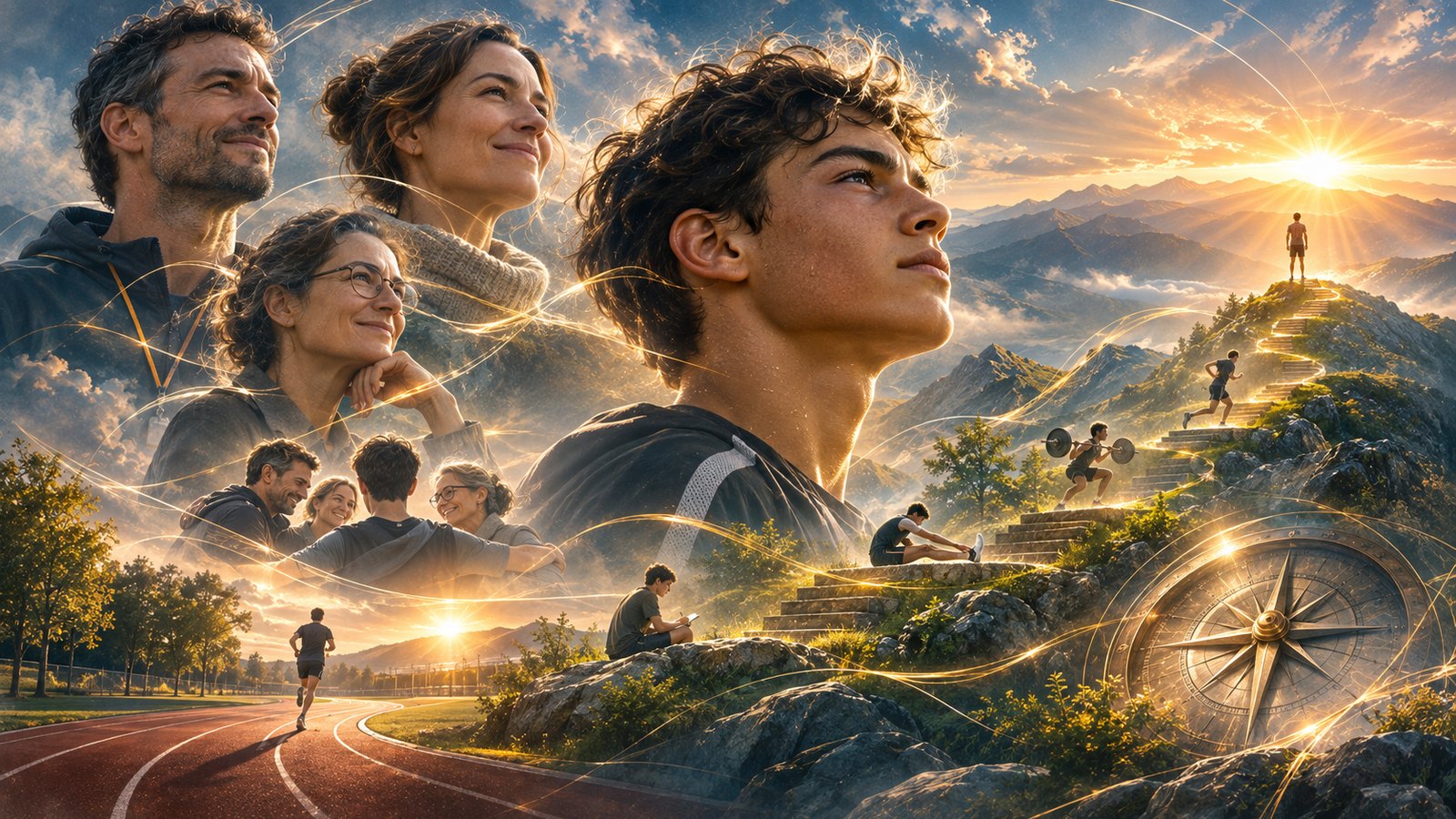
Dacă ar fi să traduc toate acestea într-o direcție pentru anii care vin, ar suna așa. Mutăm sportivul din poziția de obiect în poziția de agent. Îl includem în deciziile care îl privesc, pentru că autonomia nu este un moft, ci un predictor de performanță. Înlocuim selecția prin eliminare cu dezvoltarea pe termen lung, acceptând că scopul la 15 ani nu e medalia, ci sportivul de la 23. Construim climat de măiestrie prin formarea antrenorilor - nu doar tehnic, ci în psihologia mediului pe care îl creează. Integrăm părintele ca partener format, prin programe simple și ieftine de educare. Tratăm sănătatea mintală și psihologia ca arhitectură, nu ca ambulanță - prezente de la început, nu chemate când ceva se rupe. Și protejăm dubla carieră, pentru că un sistem care produce foști sportivi fără școală și fără sport nu este un sistem de performanță, ci unul de risipă.If I were to translate all this into a direction for the coming years, it would sound like this. We move the athlete from the position of object to that of agent. We include them in the decisions that concern them, because autonomy is not a whim but a predictor of performance. We replace selection by elimination with long-term development, accepting that the goal at 15 is not the medal, but the athlete at 23. We build a mastery climate by training coaches - not only technically, but in the psychology of the environment they create. We integrate the parent as a trained partner, through simple, cheap education programmes. We treat mental health and psychology as architecture, not as an ambulance - present from the start, not called when something breaks. And we protect the dual career, because a system that produces former athletes with neither school nor sport is not a performance system, but a waste one.
Nu pornim de la zero. Strategia Națională pentru Sport 2023-2032, adoptată de Guvernul României, recunoaște deja nevoia de a trata educația fizică și sportul cu seriozitate și de a construi un sistem coerent de dezvoltare. Fereastra de oportunitate există; ce lipsește este traducerea ei într-o arhitectură psihologică - adică în felul concret în care este tratat copilul-sportiv, zi de zi. Un document strategic nu schimbă singur un climat; o face formarea oamenilor care creează acel climat.We are not starting from zero. The National Strategy for Sport 2023-2032, adopted by the Romanian Government, already recognises the need to treat physical education and sport seriously and to build a coherent development system. The window of opportunity exists; what is missing is its translation into a psychological architecture - that is, into the concrete way the child-athlete is treated, day by day. A strategy document does not change a climate on its own; the training of the people who create that climate does.
De ce avem nevoie de un model românesc, nu de unul importatWhy we need a Romanian model, not an imported one
Aici trebuie să fiu la fel de fermă în ambele direcții. Nu putem copia pur și simplu modelele nord-americane sau vest-europene: ele au fost construite pentru alte structuri familiale, alte raporturi de autoritate, alte resurse. Implicarea parentală românească este mai intensă și mai protectivă; sistemul nostru este dual și centralizat; disparitățile urban-rural sunt reale. Un model importat fără recalibrare va eșua. Dar - și acesta este punctul pe care insist - contextualizarea culturală nu este o scuză pentru a păstra autoritarismul. Specificul românesc explică de ce avem nevoie de instrumente proprii; nu justifică menținerea unui model care arde copii. Construim pe școala românească de psihologia sportului (Epuran, Predoiu), dar rupem cu logica eliminării.Here I must be equally firm in both directions. We cannot simply copy North American or Western European models: they were built for other family structures, other authority relations, other resources. Romanian parental involvement is more intense and more protective; our system is dual and centralised; urban-rural disparities are real. An imported model without recalibration will fail. But - and this is the point I insist on - cultural contextualisation is not an excuse to keep authoritarianism. Romanian specificity explains why we need our own instruments; it does not justify keeping a model that burns children. We build on the Romanian school of sport psychology (Epuran, Predoiu), but we break with the logic of elimination.
Întrebări frecventeFrequently asked questions
Ce face, concret, un psiholog sportiv?What does a sport psychologist actually do?
Lucrează pregătirea mentală a sportivului - gestionarea anxietății de performanță, concentrarea, încrederea, motivația, rutinele, revenirea după accidentare - dar și mediul din jurul lui: relația cu antrenorul, climatul motivațional, educarea părinților. Nu este o intervenție de criză, ci o componentă a performanței.They work on the athlete's mental preparation - managing performance anxiety, focus, confidence, motivation, routines, return after injury - but also the environment around them: the coach relationship, the motivational climate, parent education. It is not a crisis intervention, but a component of performance.
De la ce vârstă are sens psihologia sportivă?From what age does sport psychology make sense?
De la începutul traseului de performanță. Perioada 15-17 ani este critică - granița dintre sportul ca pasiune și tranziția spre performanță înaltă - dar mediul psihologic sănătos se construiește din primii ani, nu se repară la final.From the start of the performance path. The 15-17 age range is critical - the boundary between sport as passion and the transition to high performance - but a healthy psychological environment is built from the early years, not repaired at the end.
Presiunea nu este necesară pentru performanță?Isn't pressure necessary for performance?
Provocarea este necesară; presiunea excesivă nu. Cercetarea distinge clar între o solicitare care dezvoltă și o presiune care corodează motivația intrinsecă și împinge spre abandon. Un climat de măiestrie nu înseamnă confort - înseamnă exigență fără teroare.Challenge is necessary; excessive pressure is not. Research clearly distinguishes between a demand that develops and a pressure that corrodes intrinsic motivation and pushes towards dropout. A mastery climate does not mean comfort - it means demandingness without terror.
De ce contează acumWhy it matters now
Sportul românesc nu are nevoie de mai mulți copii. Are nevoie să nu-i mai piardă pe cei pe care deja îi are. Diferența dintre o generație irosită și una împlinită nu stă într-un talent pe care nu-l putem controla, ci într-o arhitectură pe care o putem schimba - mâine, dacă vrem. Putem continua să filtrăm sute de copii pentru câteva medalii timpurii, pe care le vom plăti în abandonuri tăcute. Sau putem construi un mediu în care sportivul rămâne întreg, iar performanța vine ca o consecință, nu ca un tribut.Romanian sport does not need more children. It needs to stop losing the ones it already has. The difference between a wasted generation and a fulfilled one lies not in a talent we cannot control, but in an architecture we can change - tomorrow, if we want. We can keep filtering hundreds of children for a few early medals, which we will pay for in silent dropouts. Or we can build an environment in which the athlete stays whole, and performance comes as a consequence, not as a tribute.
Un sistem nu se măsoară după campionii pe care-i arată, ci după copiii pe care nu-i pierde pe drum.A system is measured not by the champions it displays, but by the children it does not lose along the way.

Simona Cârstoiu (Simona Carstoiu) - psiholog sportiv în BucureștiSimona Cârstoiu (Simona Carstoiu) - sport psychologist in Bucharest
Simona Cârstoiu (Simona Carstoiu) activează în psihologia sportivă și a performanței, în București, la Wabi Sabi Mind: pregătire mentală, gestionarea anxietății de performanță, motivație și climat motivațional, pentru sportivi, echipe și loturi naționale. → Psiholog sportiv în București · Profilul Simonei Cârstoiu · Wabi Sabi MindSimona Cârstoiu (Simona Carstoiu) works in sport and performance psychology in Bucharest, at Wabi Sabi Mind: mental preparation, performance anxiety management, motivation and motivational climate, for athletes, teams and national squads. → Sport psychologist in Bucharest · Simona Cârstoiu's profile · Wabi Sabi Mind
Autori și lucrări de referințăAuthors and reference works
Analiza se sprijină pe teoria autodeterminării (Edward Deci și Richard Ryan), pe teoria orientării spre scop și climatul motivațional (Glyn Roberts, Joan Duda), pe modelele de dezvoltare ale lui Jean Côté (DMSP și dezvoltarea holistică a sportivului), pe Chris Harwood și Camilla Knight (expertiza parentală și climatul motivațional creat de părinți), pe Natalia Stambulova și Paul Wylleman (tranziții și dubla carieră), pe Sophia Jowett (relația antrenor-sportiv), pe Ronald Smith și Frank Smoll (comportamentul antrenorului), pe sinteza meta-analitică privind promovarea timpurie a talentului (Arne Güllich și Michael Barth), precum și pe școala românească de psihologia sportului (Mihai Epuran, Radu Predoiu).The analysis draws on self-determination theory (Edward Deci and Richard Ryan), achievement goal theory and the motivational climate (Glyn Roberts, Joan Duda), Jean Côté's developmental models (DMSP and holistic athlete development), Chris Harwood and Camilla Knight (parental expertise and the parent-created motivational climate), Natalia Stambulova and Paul Wylleman (transitions and dual career), Sophia Jowett (the coach-athlete relationship), Ronald Smith and Frank Smoll (coaching behaviour), the recent meta-analytic synthesis on early talent promotion (Arne Güllich and Michael Barth), and the Romanian school of sport psychology (Mihai Epuran, Radu Predoiu).
Surse și referințeSources and references
- Ryan, R. M., & Deci, E. L. (2017). Self-Determination Theory: Basic Psychological Needs in Motivation, Development, and Wellness. New York: Guilford Press.
- Deci, E. L., & Ryan, R. M. (2000). The "what" and "why" of goal pursuits: Human needs and the self-determination of behavior. Psychological Inquiry, 11(4), 227-268.
- Harwood, C. G., & Knight, C. J. (2015). Parenting in youth sport: A position paper on parenting expertise. Psychology of Sport and Exercise, 16, 24-35. Articolul despre expertiza parentală (DOI).
- Fraser-Thomas, J., Côté, J., & Deakin, J. (2008). Understanding dropout and prolonged engagement in adolescent competitive sport. Psychology of Sport and Exercise, 9(5), 645-662. Studiul despre abandon și persistență (DOI).
- Côté, J., & Fraser-Thomas, J. (2007). Youth involvement in sport. În P. Crocker (Ed.), Sport Psychology: A Canadian Perspective (pp. 266-294). Toronto: Pearson.
- Côté, J., Turnnidge, J., & Evans, M. B. (2014). The dynamic process of development through sport. Kinesiologia Slovenica, 20(3), 14-26.
- Roberts, G. C., & Treasure, D. C. (Eds.) (2012). Advances in Motivation in Sport and Exercise (3rd ed.). Champaign, IL: Human Kinetics.
- Duda, J. L. (2013). The conceptual and empirical foundations of Empowering Coaching: Setting the stage for the PAPA project. International Journal of Sport and Exercise Psychology, 11(4), 311-318.
- Jowett, S. (2017). Coaching effectiveness: The coach-athlete relationship at its heart. Current Opinion in Psychology, 16, 154-158.
- Stambulova, N. B., & Wylleman, P. (2019). Psychology of athletes' dual careers: A state-of-the-art critical review. Psychology of Sport and Exercise, 42, 74-88.
- Smith, R. E., & Smoll, F. L. (2017). Coaching behavior research and intervention in youth sports. În Sport Psychology for Youth Coaches. Rowman & Littlefield.
- O'Rourke, D. J., Smith, R. E., Smoll, F. L., & Cumming, S. P. (2014). Relations of parent- and coach-initiated motivational climates to young athletes' self-esteem, performance anxiety, and autonomous motivation. Journal of Sport Behavior, 37(4), 395-408.
- Weinberg, R. S., & Gould, D. (2019). Foundations of Sport and Exercise Psychology (7th ed.). Champaign, IL: Human Kinetics.
- Epuran, M., Holdevici, I., & Tonița, F. (2001). Psihologia sportului de performanță. Teorie și practică. București: FEST.
- Predoiu, R. (2016). Psihologia sportului. Maximizarea performanței sportive. Iași: Polirom.
- Güllich, A., & Barth, M. (2024). Effects of Early Talent Promotion on Junior and Senior Performance: A Systematic Review and Meta-Analysis. Sports Medicine, 54(3), 697-710. Meta-analiza despre promovarea timpurie a talentului (DOI).
- International Olympic Committee (2026). Mental health in elite athletes: International Olympic Committee consensus statement (2026). British Journal of Sports Medicine. Declarația de consens IOC privind sănătatea mintală (DOI).
- Guvernul României (2023). Strategia Națională pentru Sport 2023-2032.